

The Arab Trader
A 10th century BC sculpture depicting camel riding and its use in the caravan trade
Relief with Dromedary Rider; limestone, red paint. 10th century BC. Syria, Neo-Hittite/Hurrian period. Excavated 1911-1913. Originally from the Oppenheim Collection. Now in the Walters Gallery, Baltimore, USA.
This relief was excavated in northern Syria at the site of Tell Halaf, the capital of a small independent city-state known as Guzana to the Assyrians, who conquered it in the late 9th century BCE.
More than two hundred such stone reliefs (called orthostats) decorated the façade of a temple-palace built in the 10th century BCE by a local ruler named Kapara. He reused the blocks from one or more pre-existing structures and carved an inscription in cuneiform on each one that states, “Palace of Kapara, son of Hadianu.” The blocks were placed so that limestone ones painted red alternated with others of black basalt. While the human images have been depicted in the less sophisticated, local style, many of the animal reliefs, such as the goat, may have been modeled on finely carved ivories imported from northern Syria and Phoenicia that were found at the site.
A rider perches atop the hump of a dromedary camel, urging it on with a staff. Crossed bands securely fasten the saddle onto the animal. The curving neck, rounded body, and unevenly placed hooves re-create the rocking sensation of a camel in motion. This image represents an Arabic caravan trader. From the beginning of the 1st millennium BCE the domestication of dromedaries made the caravan trade possible. This relief from Guzana may be the earliest representation of such a dromedary rider. There are traces of King Kapara’s inscription on the top edge of the stone.
Max von Oppenheim, 1911-1913 excavated at the lower course of the exterior wall of the temple of King Kapara at Guzana, Tell Halaf, Syria and sent to the United States for sale.
About von Oppenheim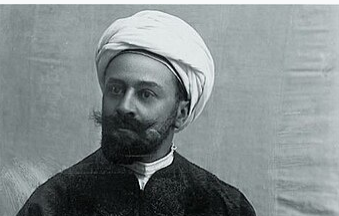
Baron Max von Oppenheim (1860–1946) was a German lawyer, diplomat, ancient historian, archaeologist, and advocate of Islam (pan-Islamist). After abandoning his career in diplomacy, he discovered the site of Tell Halaf in 1899 and conducted excavations there from 1911 to 1913 and again from 1927 to 1929. Bringing many of his finds to Berlin, he exhibited them in a private museum (the Tell Halaf Museum) in 1931. This museum was destroyed by Allied bombing in World War II, but most of the finds have since been restored and are on display again in Berlin and Bonn.
 مركز دراسات الحضارة CCS
اترك تعليقًا