

Egyptian Artifacts Gallery
يجري تحديث هذه الصفحة بانتظام. قم بزيارتها لاحقاً لرؤية الإدراجات الجديدة This page is updated regularly. Please check back later to see new listings
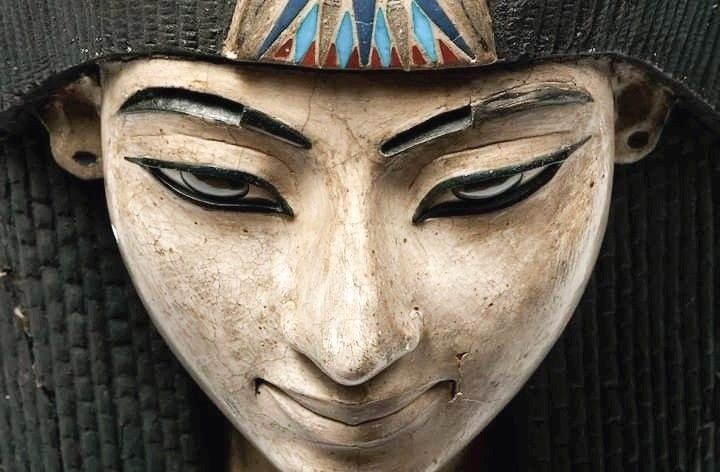
Mummy mask with inlaid eyes, of a High Official wearing the “Gold of Honour.”
New Kingdom, 18th Dynasty, c. 1331-1292 B.C.
The Art & History Museum, Brussels. Inv. E.6884
Read more.
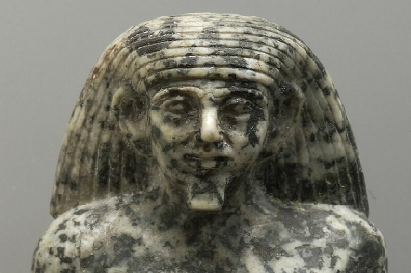
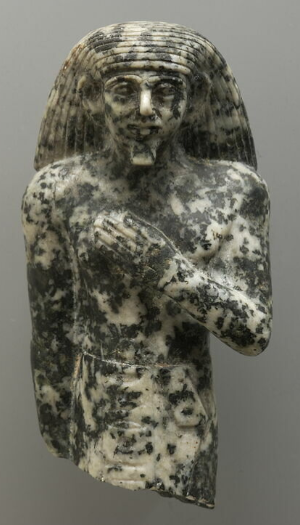
Statue of standing man; diorite – granodiorite 9.1 cm; Width: 4.7 cm; Depth: 4 cm. Period of Khakheperre Sesostris II. Place of origin: Giza. © Louvre Museum: E 22754; Curtis No. 255.
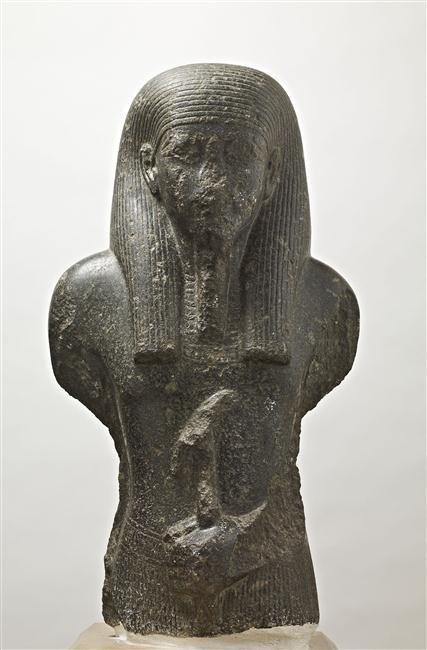
Bust of a male deity holding Was-sceptre
New Kingdom, 18th Dynasty, reign of Amenhotep III, ca. 1391-1353 BC.
© Musée d’Archéologie Méditerranéenne, Marseille. n.207
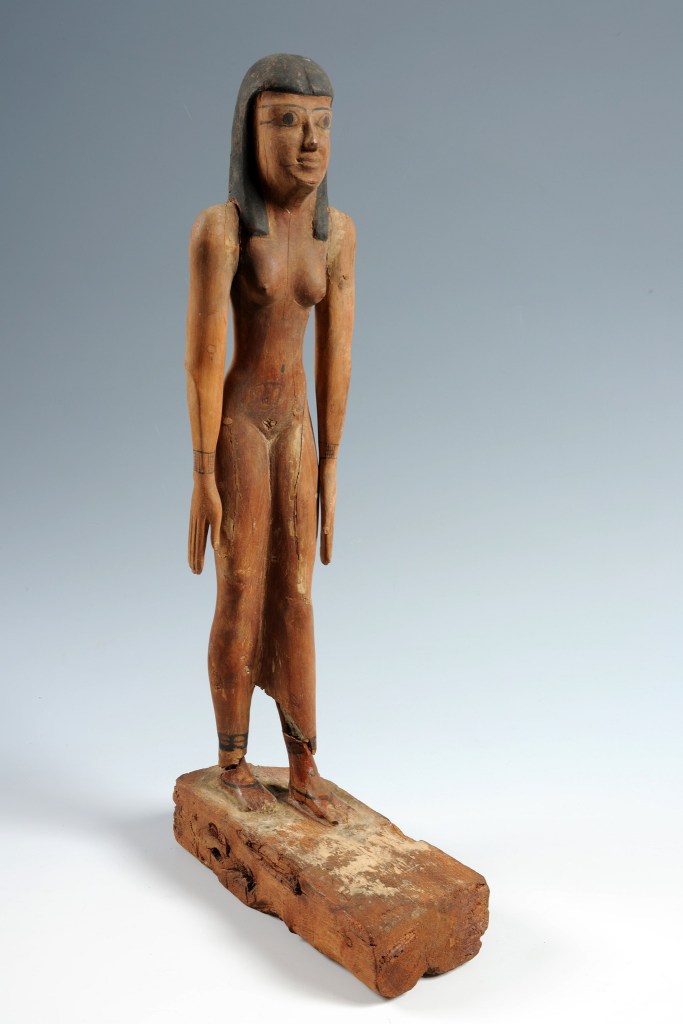
Statuette of a woman
First Intermediate Period, ca. 2118-1980 BC. From Asyut.
© Egyptian Museum of Turin. Suppl. 14776

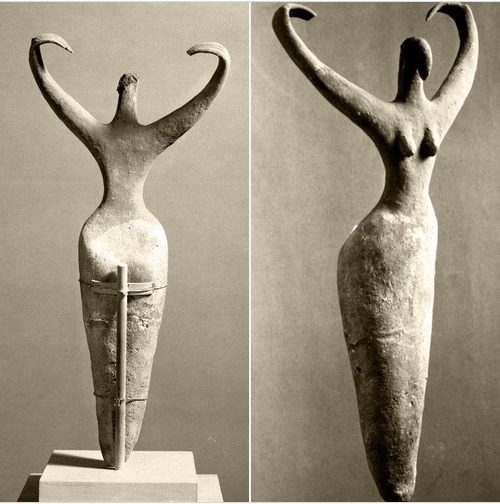
Female figurine, from El Mamariya (ca. 3600-3500 BC.; painted terracotta, from Naqada.

Painted limestone statuette of an Amarna princess, c. 1351-1332 B.C. Daughter of king Akhenaten and Nefertiti.
Akhenaten and Nefertiti had 6 known daughters, one of which died young and whose death and funerary scenes are depicted upon the tomb wall in Amarna, her name was Meketaten (meaning “Behold the Aten” or “Protected by Aten”). The others were, Meritaten, Ankhesenamun (sister-wife of Tutankhamun and previously named Ankhesenpaaten), Neferneferuaten Tasherit, Neferneferuru and Setepenre. This head is usually associated with Meriaten, but it is not certified.
The head was acquired by the Musée du Louvre in 1937 from Armenian-American archeologist Hagop Kevorkian, and is currently on display within Room 638, Sully Wing, Level 1. Read more.
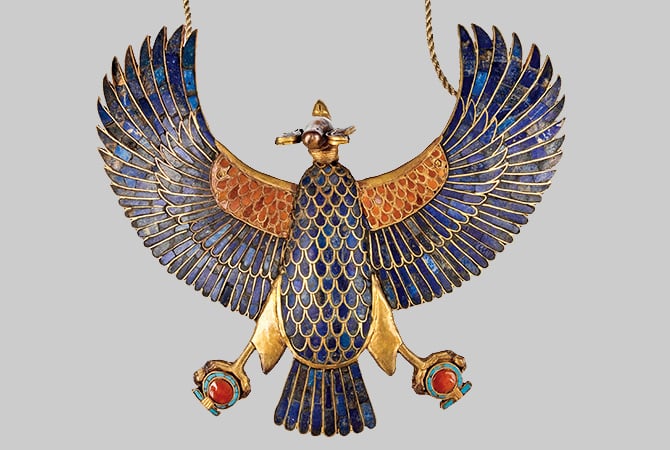
A vulture found in the tomb of the young pharaoh Tutankhamun. This pectoral, or chest ornament prominently features the goddess Nekhbet, the patroness of Upper Egypt; Cloisonné, lapis lazuli, carnelian, and red and blue glass.
New Kingdom, 18th Dynasty, ca. 1332-1323 BC.
Tomb of Tutankhamun (KV62), Valley of the Kings, Thebes.
© Grand Egyptian Museum. JE 61894 – Carter 267I

Stele of the lector priest of Amun Siamun and his mother the singer Amenhotep.
New Kingdom, 18th Dynasty, reign of Amenhotep II-Thutmose IV, ca. 1420 BC
This stele depicts the Lector-priest Siamun and his mother, the singer Amenhotep, receiving offerings from “his sister” (probably his wife), the chantress Iretnofret.
© Metropolitan Museum of Art. 1970.49

Amethyst Scaraboid with Horus as a Falcon
Late Period, ca. 664-332 BC.
Now in the Private Collection.
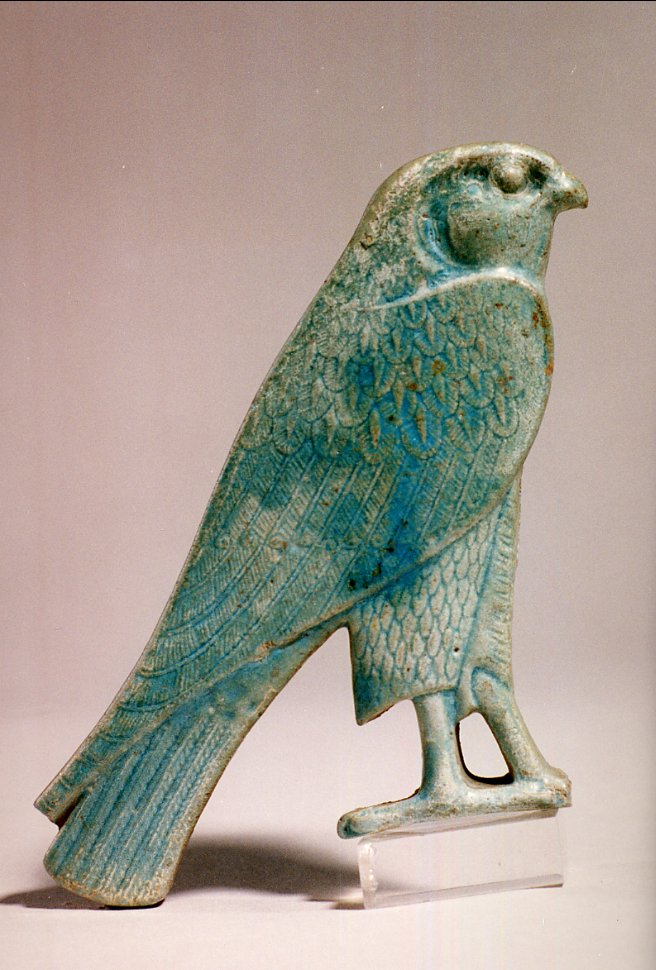
Glazed Inlay of a Falcon
Ramesside Period, c. 1292-1069 B.C.
British Museum. EA61835
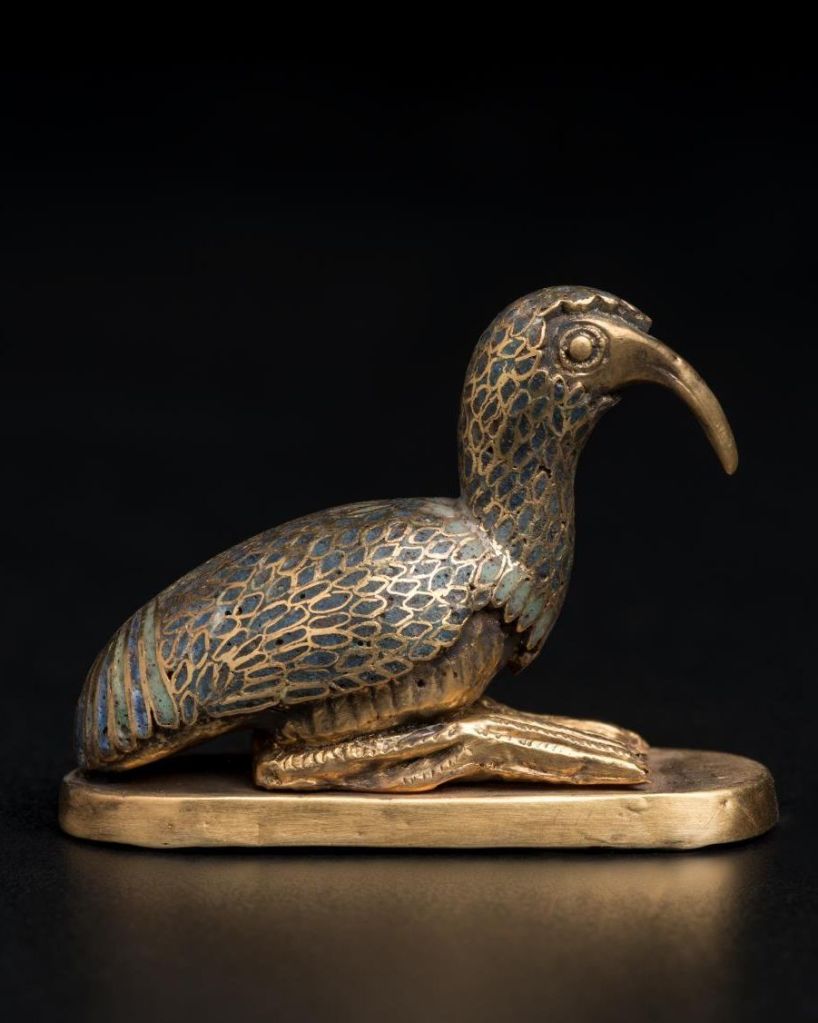
An ibis upon an oblong gold plinth, with feathers represented by blue copper enamel.
Hellenistic, Ptolemaic, c. 305–30 B.C.


Statue of Petamenhotep
Late 25th or Early 26th Dynasty.
Calcite (Egyptian alabaster). From Karnak. Now in the Egyptian Museum, Cairo. JE 36578. Photo: Sandro Vannini
Fragment of a jug. New Kingdom, 18th Dynasty, reign of Thutmose III – Amenhotep III, c. 1479–1352 B.C. It is thought such vessels would have been associated with motherhood, midwifery in particular.
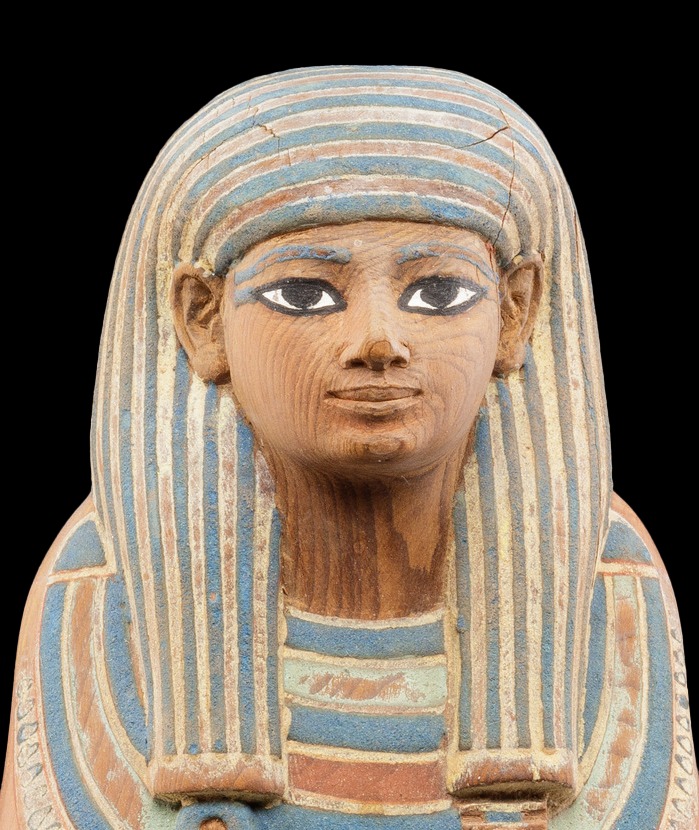
Ushabti of Yuya, grandfather of Akhenaten. New Kingdom, 18th Dynasty, reign of Amenhotep III, c. 1390–1352 B.C. Tomb of Yuya & Thuya (KV46), Valley of the Kings
Met Museum. 30.8.57
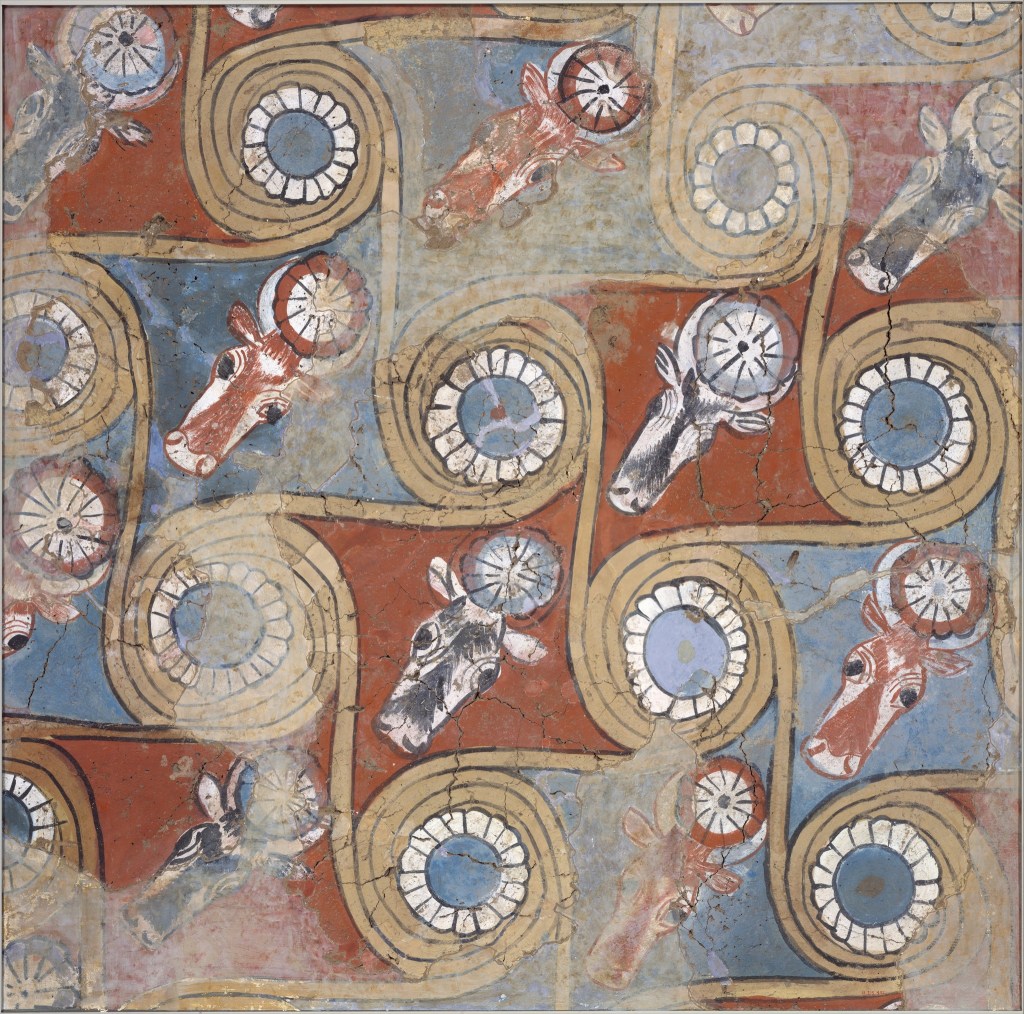
Decorated plaster ceiling portion from the antechamber to the king’s bedroom at the palace of Malkata, c. 1390–1352 B.C.
Reign of Amenhotep III, remnants of Amenhotep III’s Malkata Palace, West Bank of the Nile at Thebes, Upper Egypt.
55 1/8 in x 55 1/8 in
Met Museum. 11.215.451
المزيد من فنون وادي النيل في الصفحات التالية More Nile Valley Arts on the following pages
 مركز دراسات الحضارة CCS