

Egyptian Artifacts Gallery (page 2)
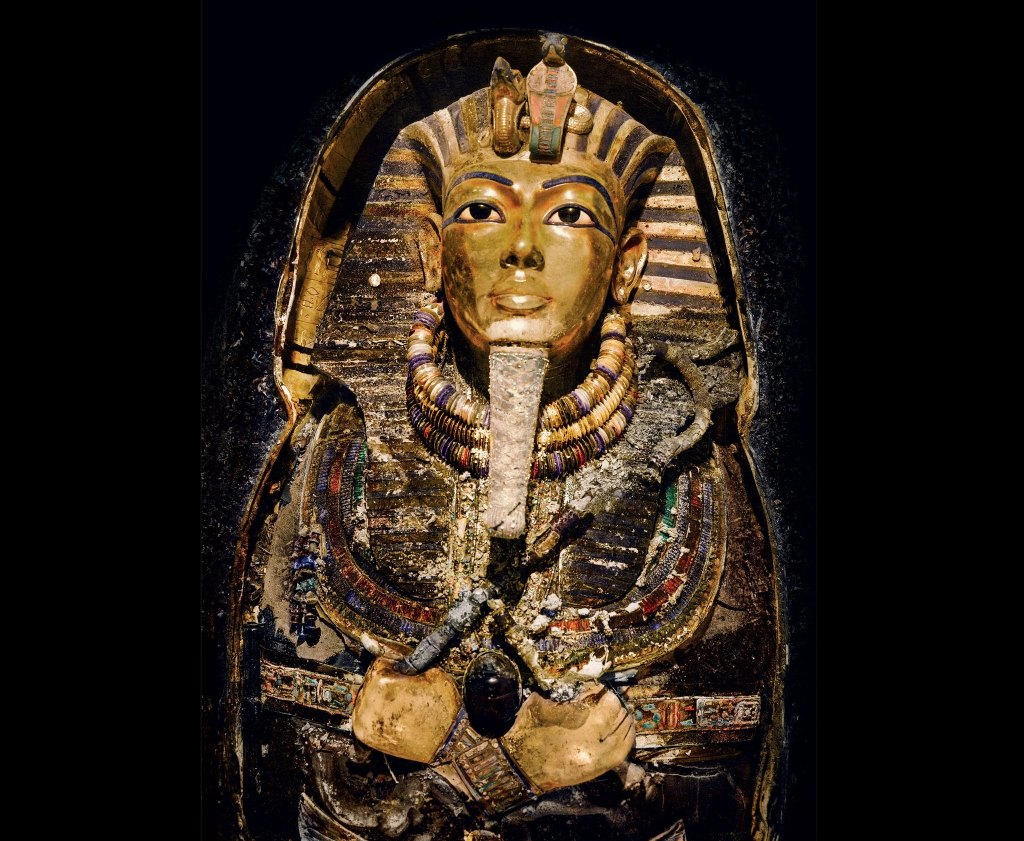
This photograph captures the early moments after Howard Carter opened King Tutankhamun’s solid gold coffin.
Harry Burton/The Griffith Institute.

The beloved Great Royal Wife of Ramesses II, Nefertari is shown being led via the hand of the god Horus to the seated god Ra-Horakhty and goddess Imentet-Hathor.
On the left, a wall depicts the goddess Neith.
Tomb of Nefertari, Valley of the Queens, West Thebes, c. 1250 B.C.

Canopic jar of king Tutankhamun
New Kingdom, 18th Dynasty, c. 1333-1323 B.C. Egyptian Museum, Cairo. JE 60687. Read more.
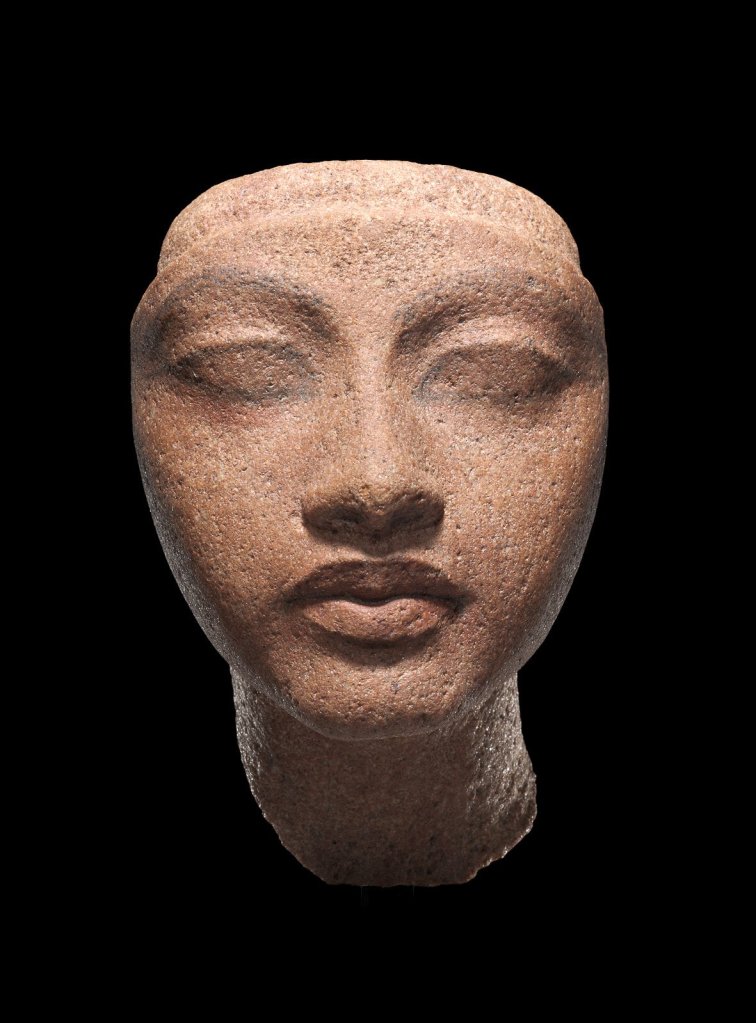
Quartz head of an Amarna royal female. New Kingdom, 18th Dynasty, c. 1353–1336 or 1351–1334 B..c. Ägyptisches Museum. ÄM 21245. Read more.
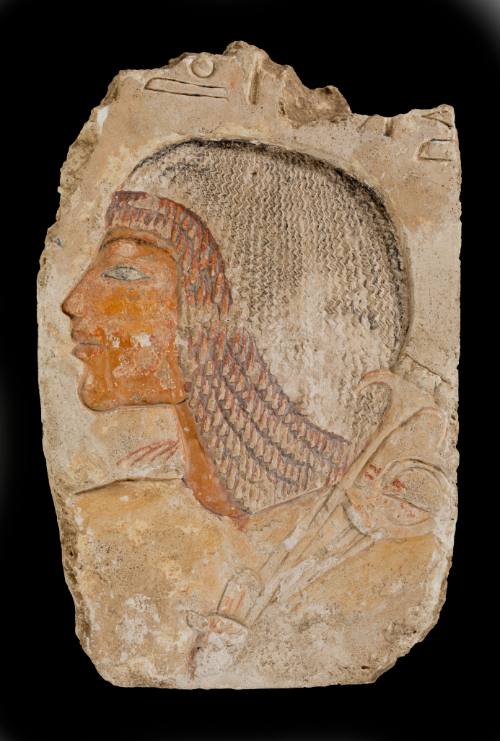
Ay, Fan Bearer. New Kingdom, late 18th Dynasty, ca. 1360 BC.
Now in the Worcester Art Museum. 1949.42. Read more.

Ancient Egyptian practice of Tahtib
Tahtib, with archery and wrestling, was then among the three disciplines of warfare taught to soldiers.Read more.

A guest smells the lotus flower while the others pass along the fruit in a banquet scene.
New Kingdom, 18th dynasty, c. 1421-1372 B.C.
Tomb of Nakht (TT52), Sheikh Abd el-Qurna, Thebes.

Model Sporting Boat
Middle Kingdom, 12th Dynasty, ca. 1981-1975 BC.
Tomb of Meketre (TT280), Sheikh Abd el-Qurna, Thebes.
Now in the Metropolitan Museum of Art. 20.3.6

Golden Flies of Valor of Queen Ahhotep
Second Intermediate Period, 17th Dynasty, ca. 1560-1530 BC.
From Tomb of Ahhotep, Dra’ Abu el-Naga’, Thebes.
Now in the Luxor Museum. JE 4694 – CG 52671
Read more.

Figurine of a Female Dog nursing 5 Pups
The piece measures at 18.5 cm and based upon its style, it is believed to date from the Middle Kingdom, c. 2035-1680 B.C.
The piece was acquired by Musée du Louvre via Chanlaire, in 1917, and is currently on display within Sully, [AE] Room 332 – “Breeding, hunting and fishing” gallery. E 11557.
Read more.

Bronze figure of a mother cat nursing kittens upon a wooden base
Late Period to Ptolemaic Period, 26th Dynasty or later, c. 664–30 B.C.
Said to be from Saqqara, Egypt.
Brooklyn Museum. 37.406Ea-b
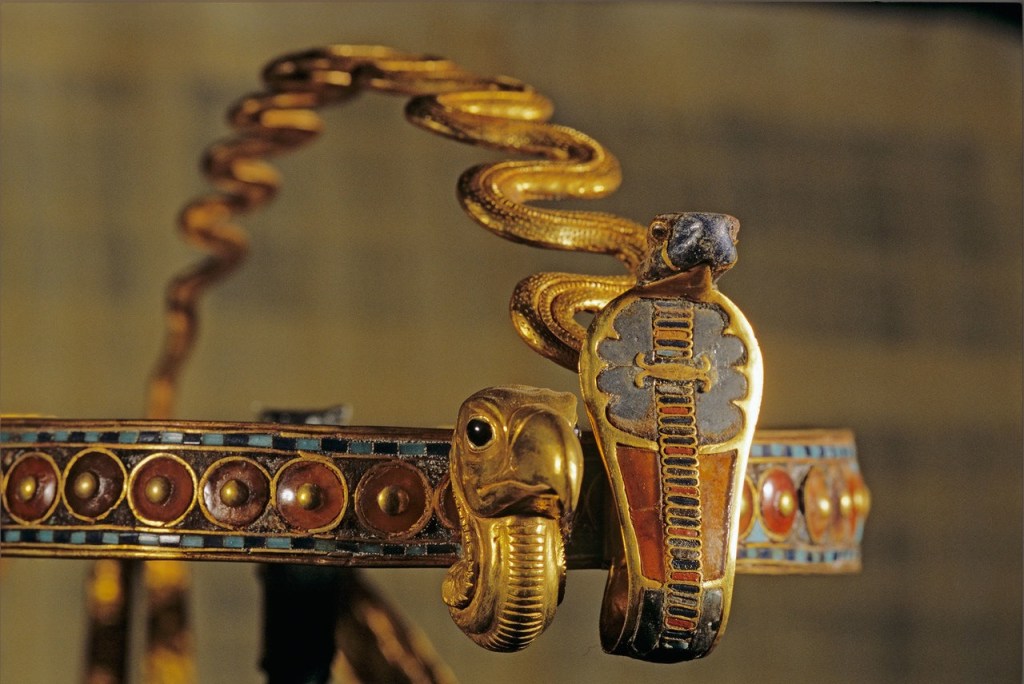
Diadem of Tutankhamun
This gold diadem was designed to secure the wig of the king during ceremonies; Cloisonnes, turquoise, lapis lazuli, and blue glass.
At the centre front are the protective deities of Upper and Lower Egypt: the vulture goddess, Nekhbet, with inlaid obsidian eyes, and the cobra goddess, Wadjet, inlaid with semiprecious stones and glass.
Egyptian Museum, Cairo. JE 60684. Read more

.
“Beautiful are the Beauties of Aten, the Beautiful one has come”
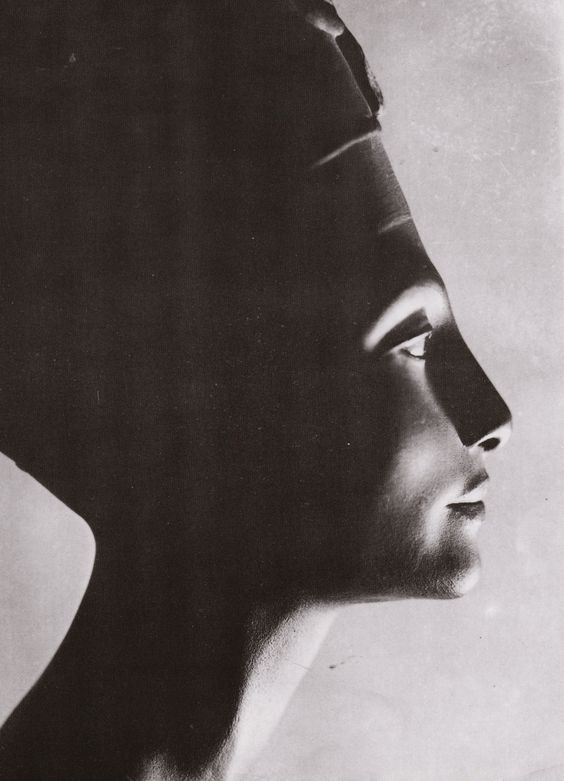
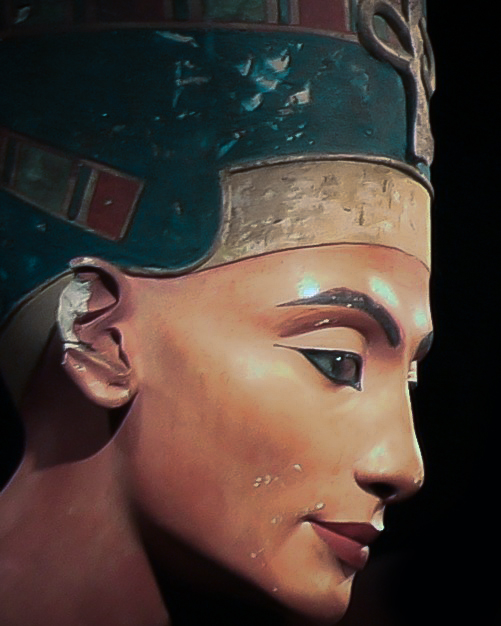
A painted limestone bust of Nefertiti of 19 in. tall & 20 kg (44lbs) in weight. New Kingdom, 18th Dynasty, Amarna Period, c. 1345 B.C. Neues Museum, Berlin, Germany. ÄM 21300. Photograph by Francesco Zenaro. More.
It was believed Nefertiti vanished from historical records around the 12th year of her husband’s 17-year reign, which corresponds to approximately 1338 B.C. She might have died around this time due to her sudden disappearance, although there’s no direct evidence confirming her death or burial. Some theories suggest she might have ruled as Pharaoh under the name Neferneferuaten, although some propose Neferneferuaten was in fact a daughter of Nefertiti and Akhenaten. More.
المزيد من فنون وادي النيل في الصفحات التالية More Nile Valley Arts on the following pages
 مركز دراسات الحضارة CCS