

Mesopotamian Artifacts Gallery (page 2)
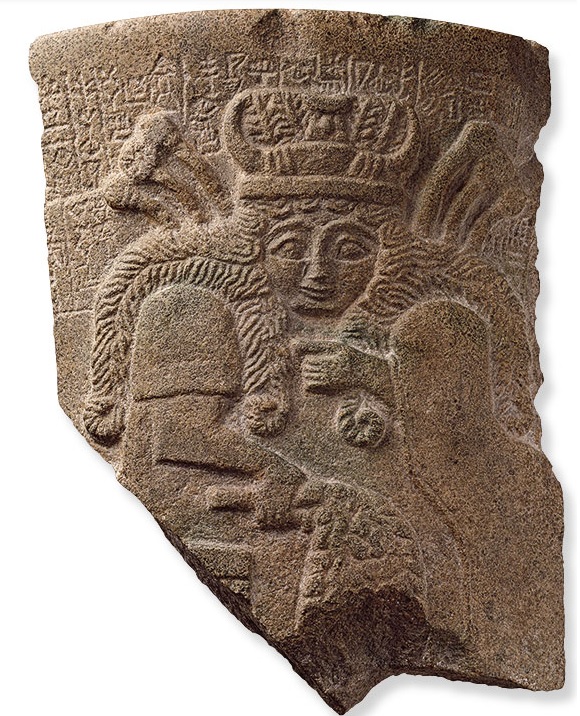
Fragment of a vessel with frontal image of goddess; Basalt.
Early Dynastic IIIb period, ca. 2400 BC. Cuneiform inscription in Sumerian.
©Staatliche Museen Zu Berlin, Vorderasiatisches Museum, Acquired 1914–15; VA 07248. Foto: Olaf M. Teßmer.
This vessel fragment shows one of the first images of an anthropomorphic goddess created in Mesopotamia. The divine nature of the figure is expressed by the horned crown with feathers (or fronds) and an animal head, as well as by the vegetal elements above her shoulders, possibly identifying her as Nisaba, Ninhursag, or Inanna. Her hair and the cluster of dates in her right hand depict the figure as a goddess of fertility and abundance. The inscription mentions the vase itself, called bur-sag̃ in Sumerian and dedicated to this female deity.
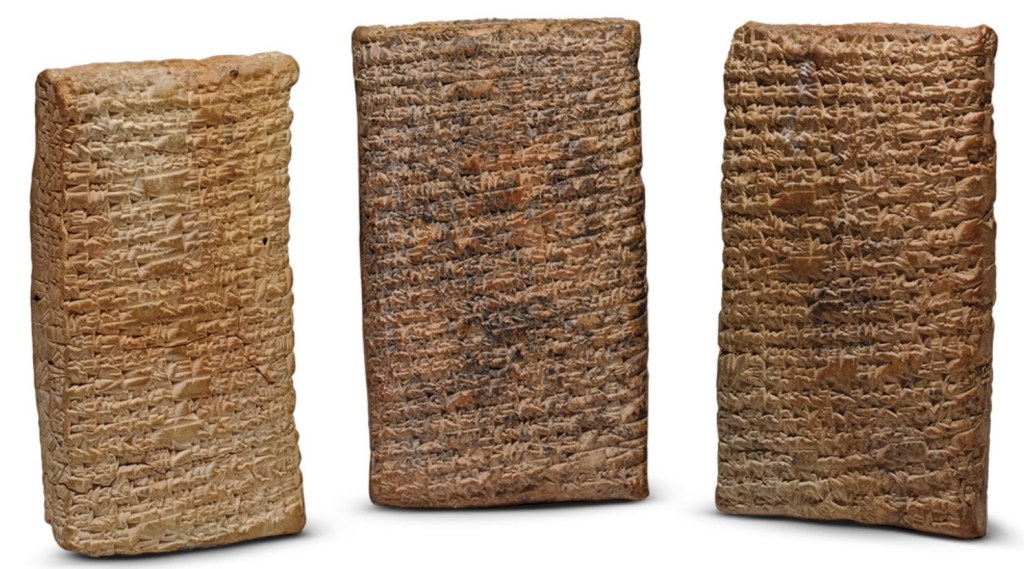
Tablets inscribed with “The Exaltation of Inanna” in three parts, possibly Larsa (modern Tell Senkereh). Old Babylonian period, ca. 1750 BC.
©Yale Babylonian Collection; YPM BC 018721/YBC 4656 (Lines 1–52), YPM BC 021234/YBC7169 (Lines 52–102), YPM BC 021231/YBC 7167 (Lines 102–53)
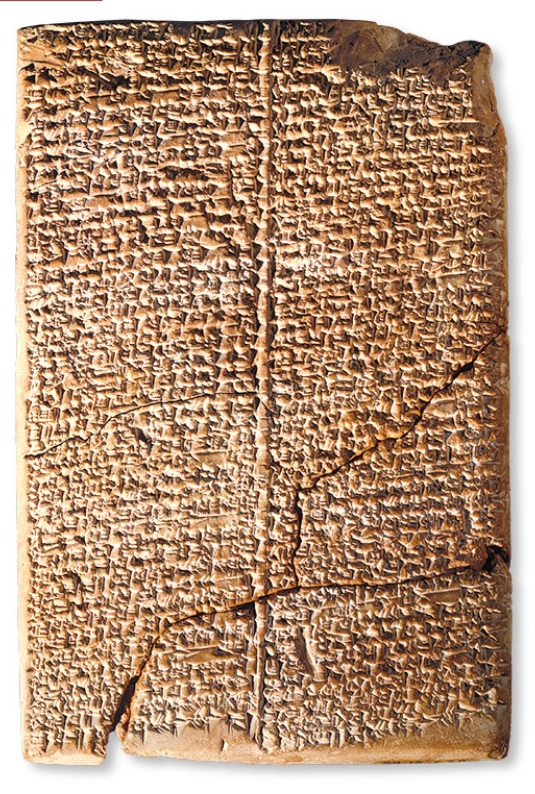
Tablet inscribed with “The Exaltation of Inanna”. Nippur (modern Nuffar). Old Babylonian period, ca. 1750 BC.
©University of Pennsylvania Museum of Archaeology and Anthropology, Philadelphia, USA, Babylonian Expedition Fund Purchase, 1888; CBS 7847.
Sidney Babcock: “The Exaltation of Inanna” is a powerful statement of Enheduanna’s devotion to the goddess of sexual love and warfare, with invaluable autobiographical references to the author’s life as a high priestess. The extract is from the beginning of the poem, in praise of Inanna’s might and anger:
You gathered them together, you pressed them to your breast.
You spew venom on a country, like a dragon.
Wherever you raise your voice, like a tempest, no crop is left standing.
You are a deluge, bearing that country away.
You are the sovereign of heaven and earth, you are their warrior goddess!”
“Queen of all cosmic powers, bright light shining from above,
Steadfast woman, arrayed in splendor, beloved of earth and sky,
Consort of Heaven, whose gem of rank is greatest of them all,
Favored for the noblest diadem, meet for highest sacral rank,
Who has taken up in hand cosmic powers sevenfold,
My lady! You are warden of the greatest cosmic powers,
You bore them off on high, you took them firm in hand,
Clay tablet inscribed in Sumerian with Temple Hymns, Nippur (modern Nuffar). Old Babylonian period (ca. 1894–1595 BC). University of Pennsylvania Museum of Archaeology and Anthropology, Philadelphia, USA, Excavated 1890–93; CBS 07073 + N 1193 + N 7018 + N 7028 + N 7900
Sidney Babcock: Enheduanna compiled and wrote short hymns written for sanctuaries located in cities throughout Mesopotamia. One of the hymns recorded on this tablet is about the temple of the supreme god Enlil in Nippur. According to Sumerian mythology, Nippur was a primordial city where heaven and earth met:
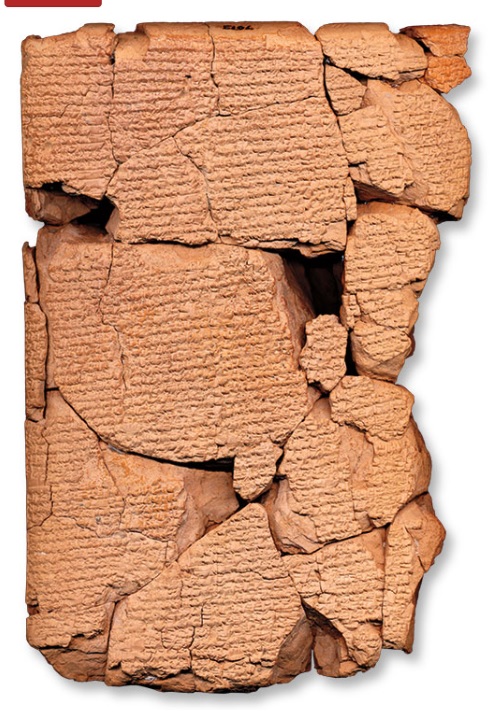

Tablet Inscribed with a Fragment of the Babylonian Flood Story Epic of Atrahasis in Akkadian, First Dynasty of Babylon, reign of King Ammi-saduqa (ca. 1646–1626 b.c.), Clay, 4 1/2 × 3 9/16 in. (11.4 × 9 cm).
© The Morgan Library & Museum.
your [ ] is a princely holy area,
your base brings together heaven and earth.
Your prince, the great prince Enlil, the good lord,
the lord of the boundary of heaven, the lord who determines fate,
O shrine of Nippur, great mountain of Enlil,
he erected a house in your holy area and took a seat upon your dais.
O [ ], shrine where fate is determined,
[ ], foundation, raised by a ziggurat,
[ ], residency of Enlil,
your [ ], your right and your left are Sumer and Akkad.
O House of Enlil, your interior is cool, exterior determines fate.
your doorjamb and your beam are a high mountain,
your projecting gate-tower is a glorious mountain.

Stone Foundation Tablet with a Historical Inscription of King Tukulti-Ninurta I in Assyrian; Gypsum alabaster, Middle Assyrian period, Reign of Tukulti-Ninurta I (ca. 1243–1207 B.C.)
© Private collection.
This tablet was made during the reign of King Tukulti-Ninurta I, ca. 1243 B.C.–1207 B.C. He was notable for his conquest of Babylon, which made him the first ruler to ensure full Assyrian supremacy over all of Mesopotamia, as well as for an extensive building program in Assur, which included the restoration of the temple of Ishtar.
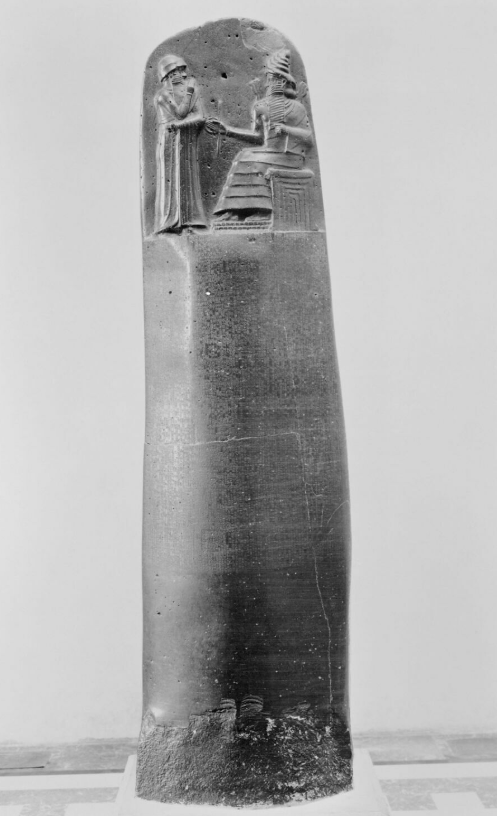
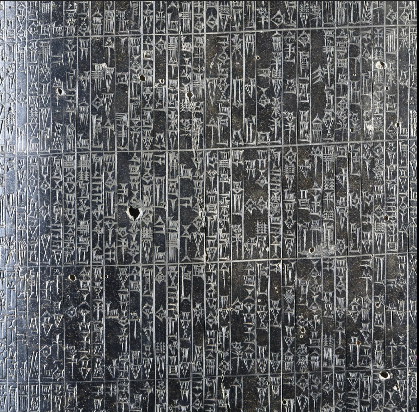
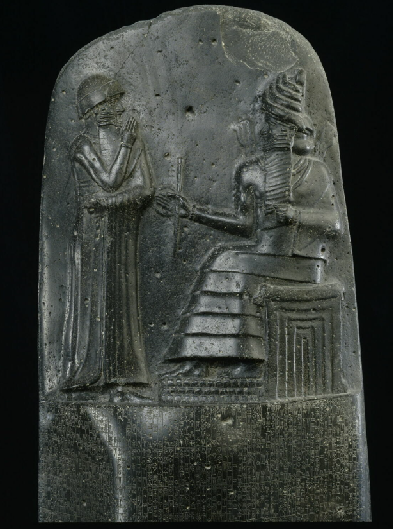


Code of Hammurabi (-1792 / -1750 – 1st dynasty of Babylon), basalt; height: 225 cm; width: 79 cm; thickness: 47 cm. Place of discovery: Susa.
Shamash (seated, throne, tending, circle and staff); Hammurabi (beard, robe, bare shoulder: right, high-brimmed cap); The scene represents the meeting between the god Shamash and King Hammurabi of Babylon, legitimizing the sovereignty of the king and legal decisions engraved on the stele; Language: Akkadian.
Currently on display at the Louvre, Room 227 Richelieu Wing. Main number: SB 8.
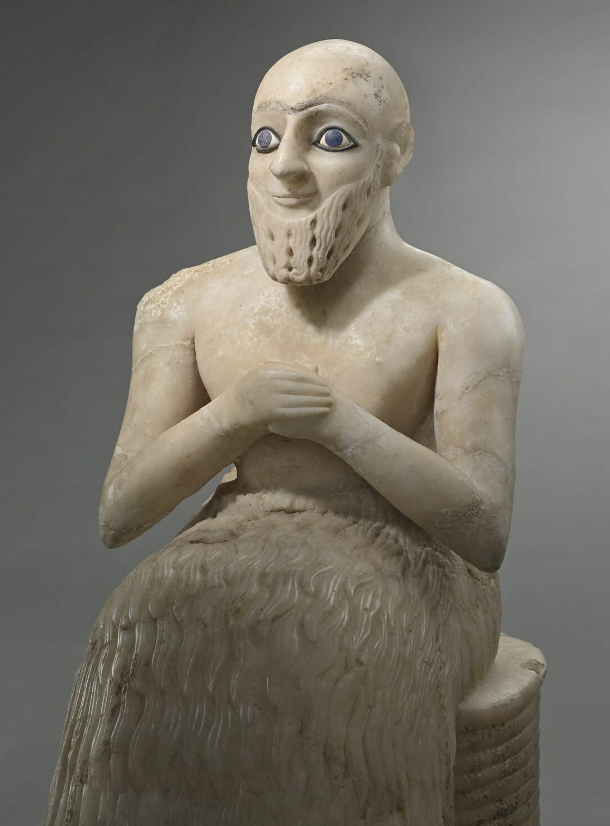

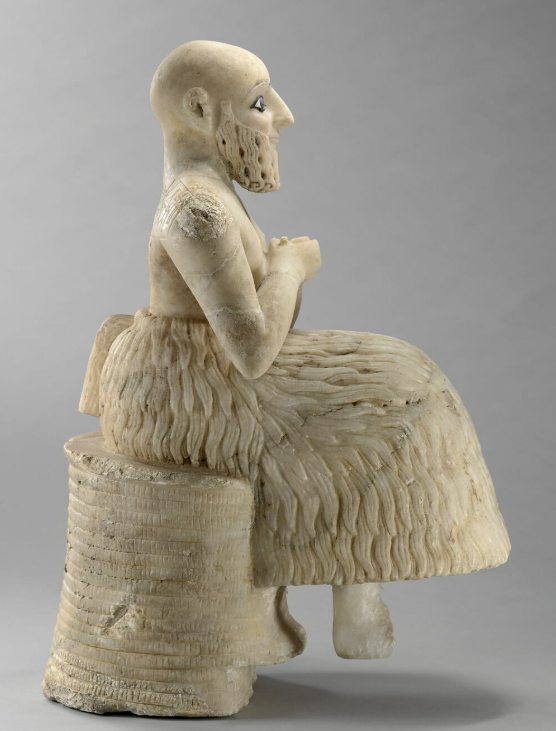
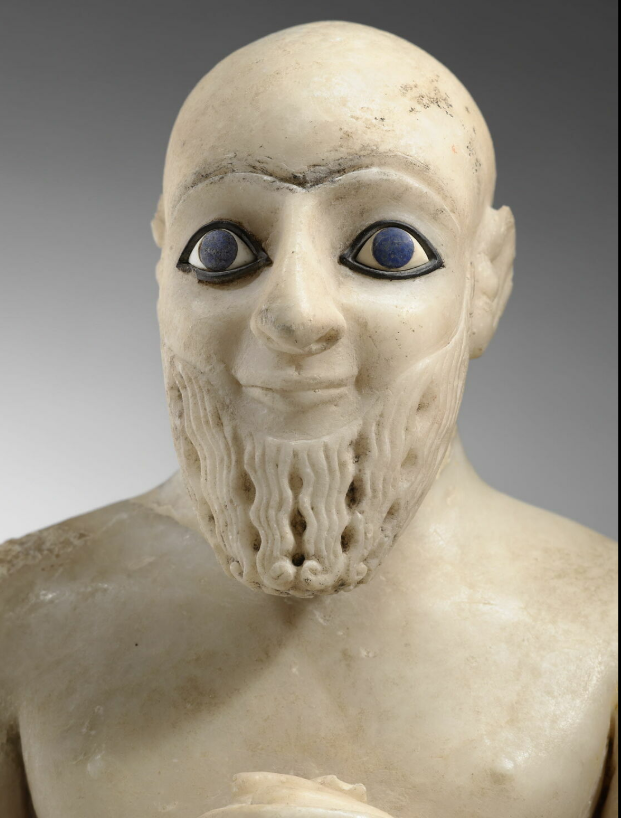
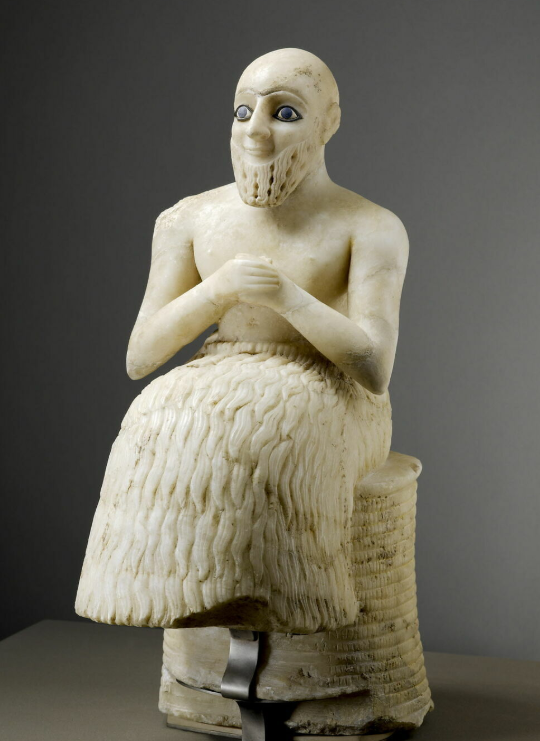

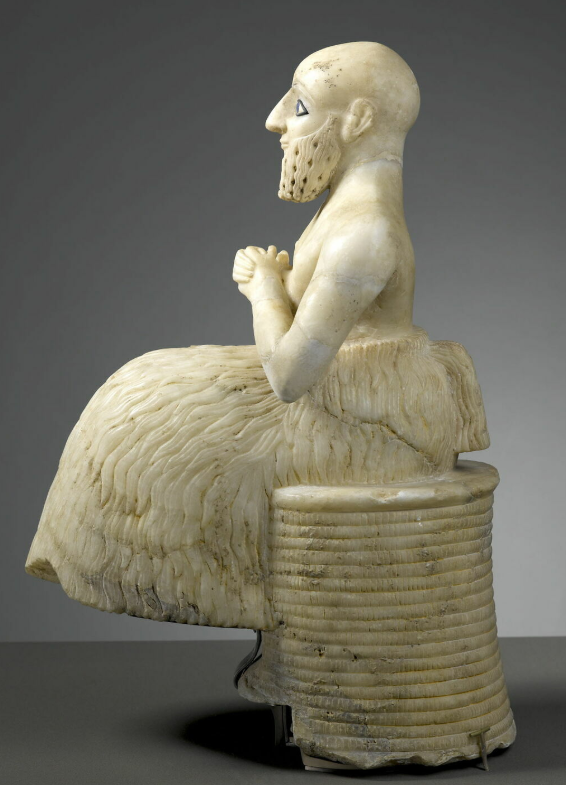


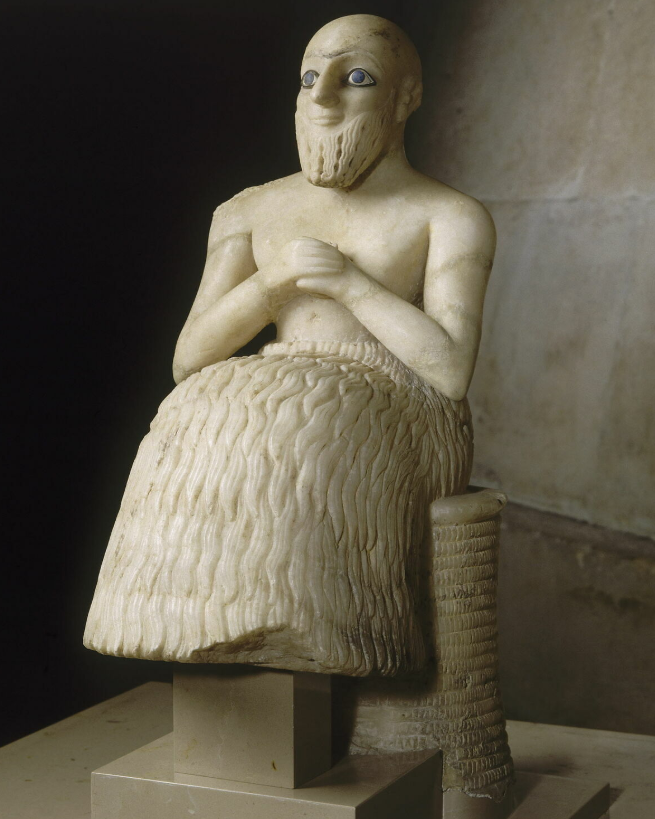

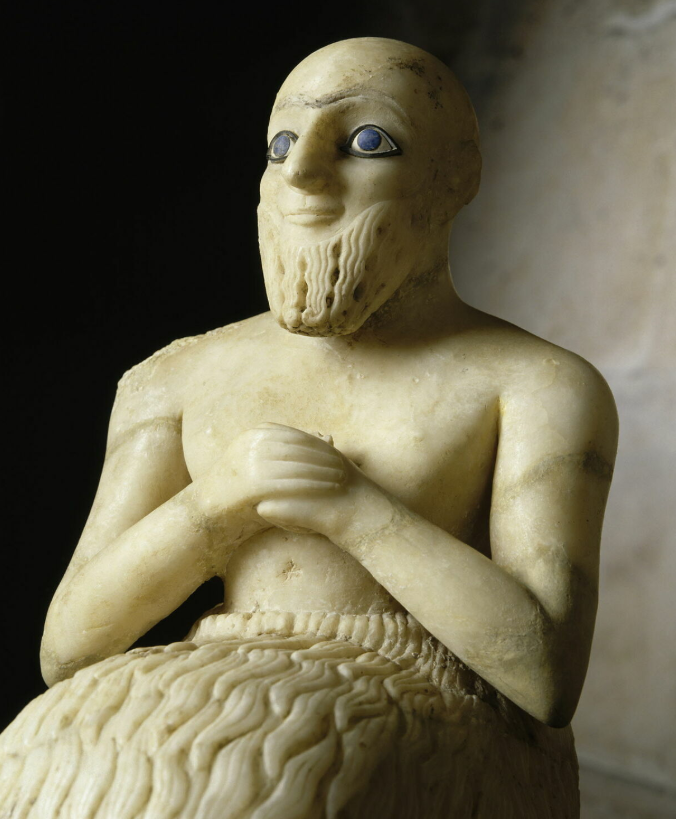

Nu-banda Ebih-Il (-2500 / -2340 -Archaic Dynastic IIIB). From Mari temple of Ishtar (alabaster, shell, lapis lazuli, bitumen; hight: 52.5 cm; width: 20.6 cm; thickness: 30 cm; weight: 32.5 kg). Date of discoveryJanuary 23, 1934.
Inscribed statue of steward Ebih-Il praying with joined hands, shaved head, bearded and wearing a kaunakes-type skirt. He is seated on a wickerwork stool; the eyes are treated with inlays as the eyebrows and beard must have been.
cuneiform writing Inscription in Akkadian: “Statue of Ebih-Il, the Steward, to Ishtar he dedicated it”
Currently on display at the Louvre, Room 234 Richelieu Wing. Main number: AO 17551 A.
المزيد عن فنون الرافدين في الصفحات التالية More about Mesopotamian arts on the following pages
 مركز دراسات الحضارة CCS