

Mesopotamian Artifacts Gallery (page 4)
Vessel with faces of female deities; Gypsum alabaster. Early Dynastic IIIa period, ca. 2500 BC.
© The Metropolitan Museum of Art, New York, 1973; 1973.33.1
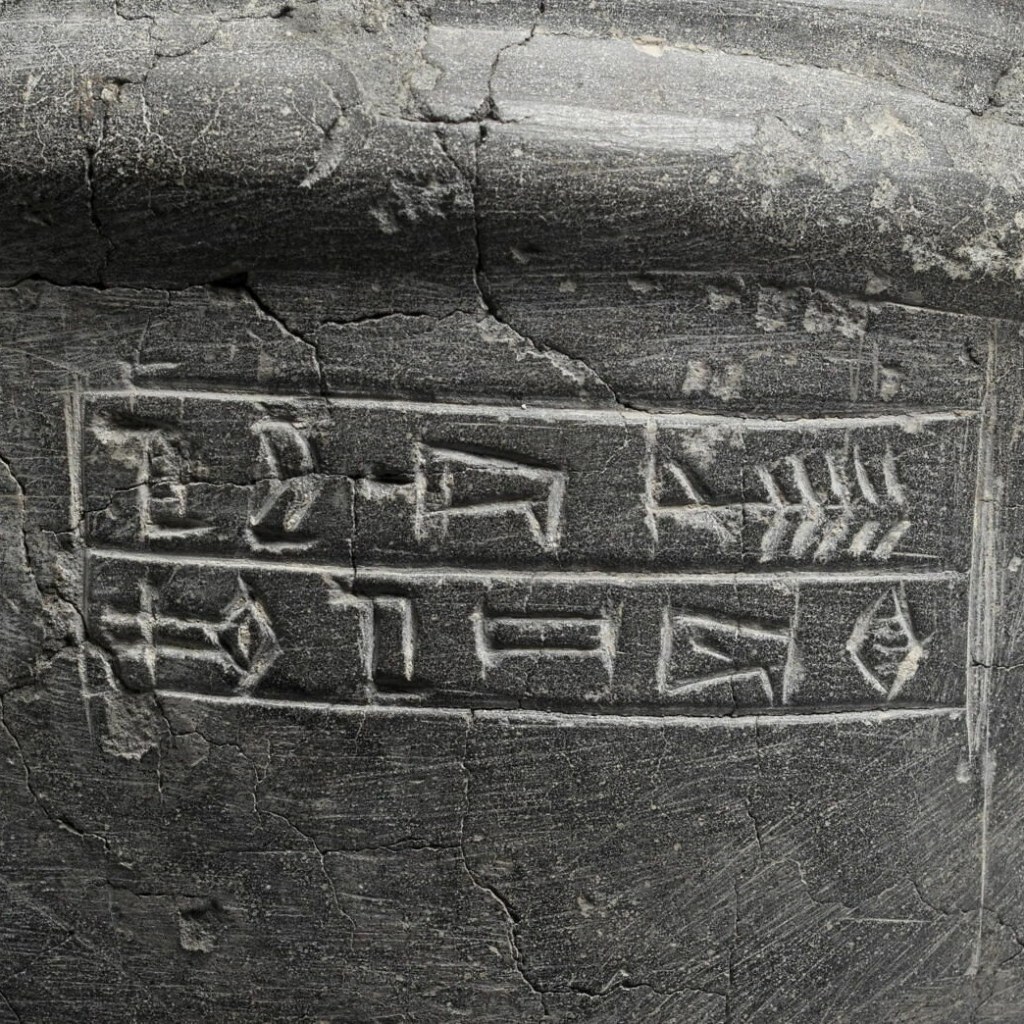
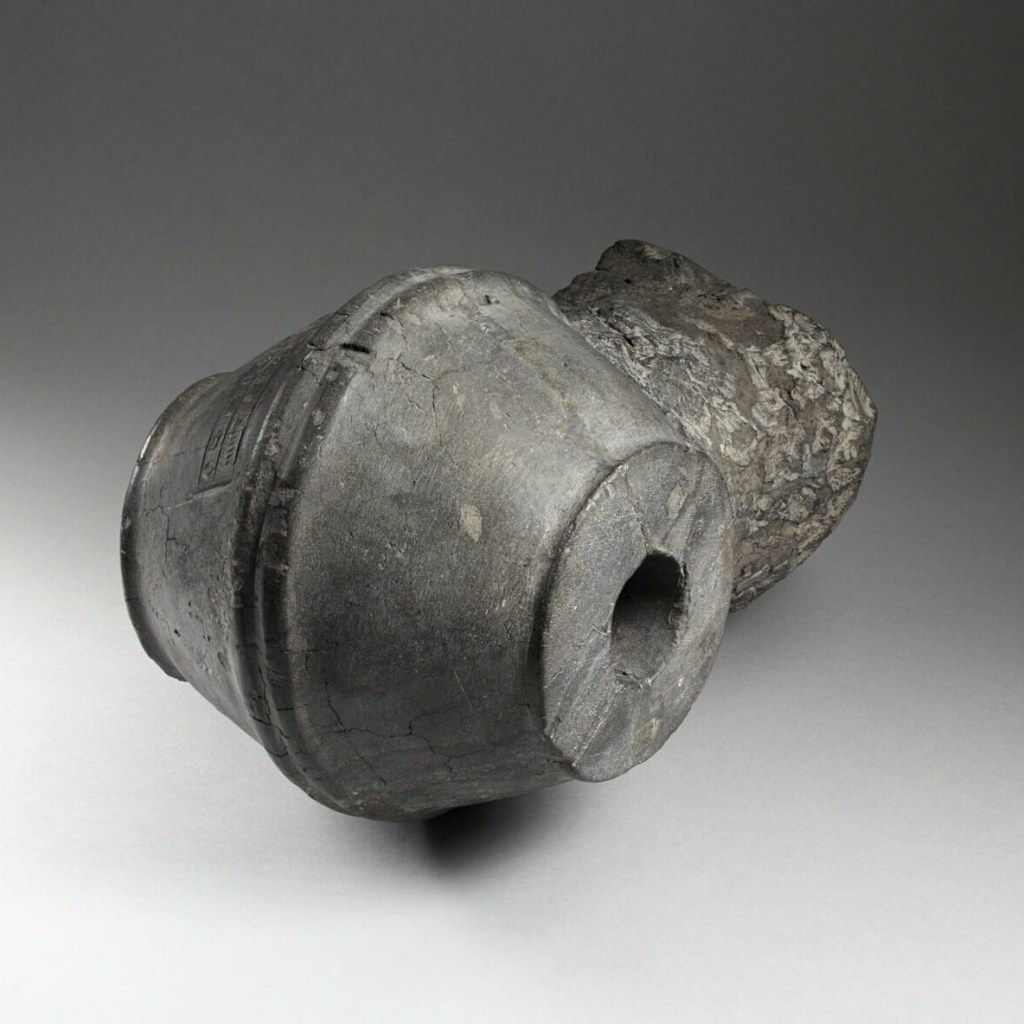
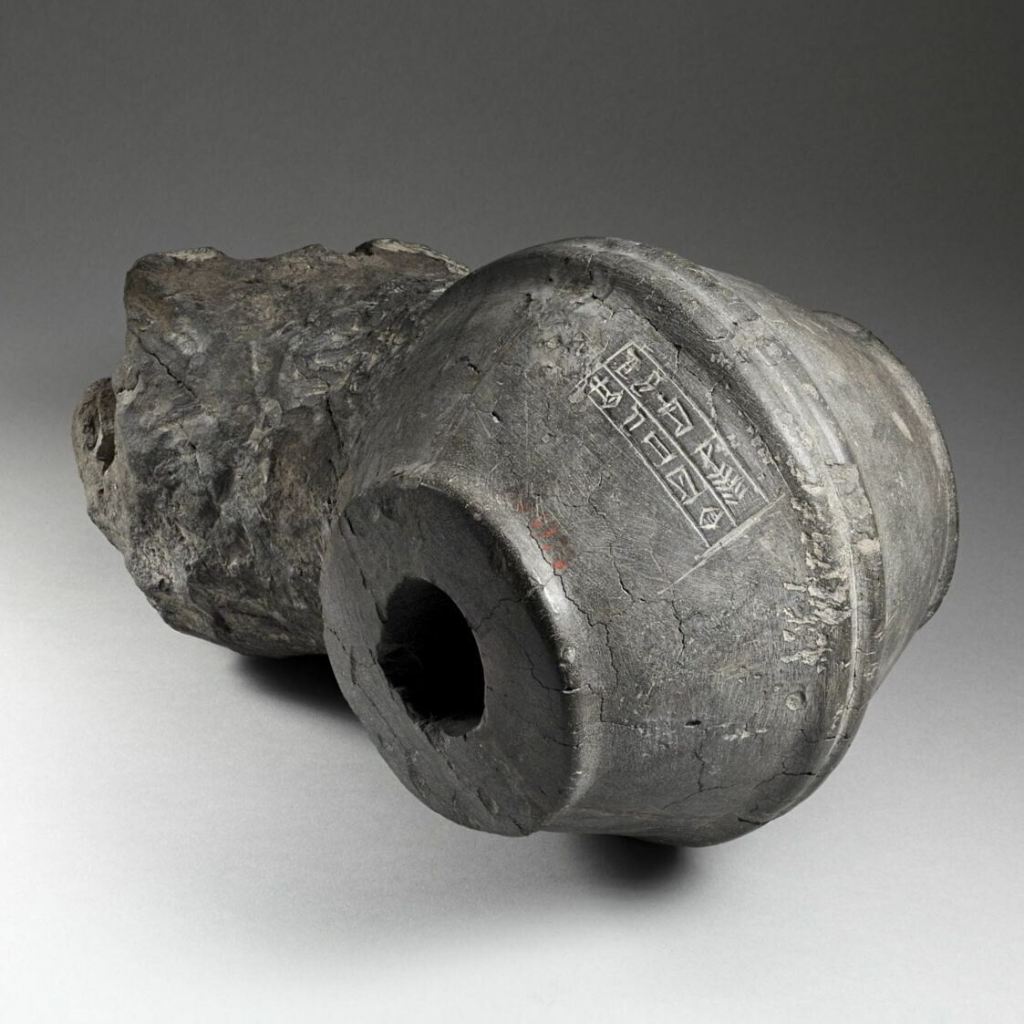
At least 4,200 years old, this bitumen ‘door latch’ is inscribed with a cuneiform text in Akkadian, referencing Shurush-Kin, a prince of Umma, contemporary to Manishtusu of Akkad. The artifact measures 37.5 × 21 × 20 cm (14 3/4 × 8 1/4 × 7 7/8 in) and weighs 13.52 kg (29.8 lbs). It is now housed at the Musée du Louvre in Paris, France (Aacquired by the museum through purchase in 1911.)

.
.
.
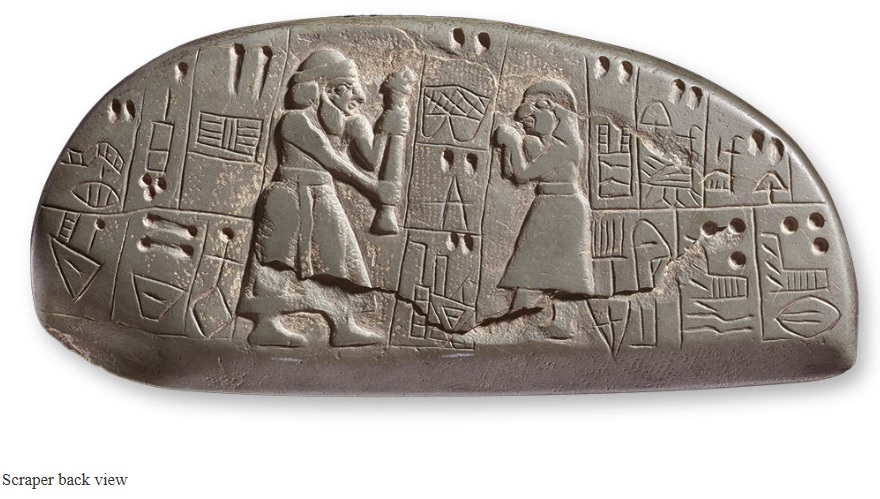
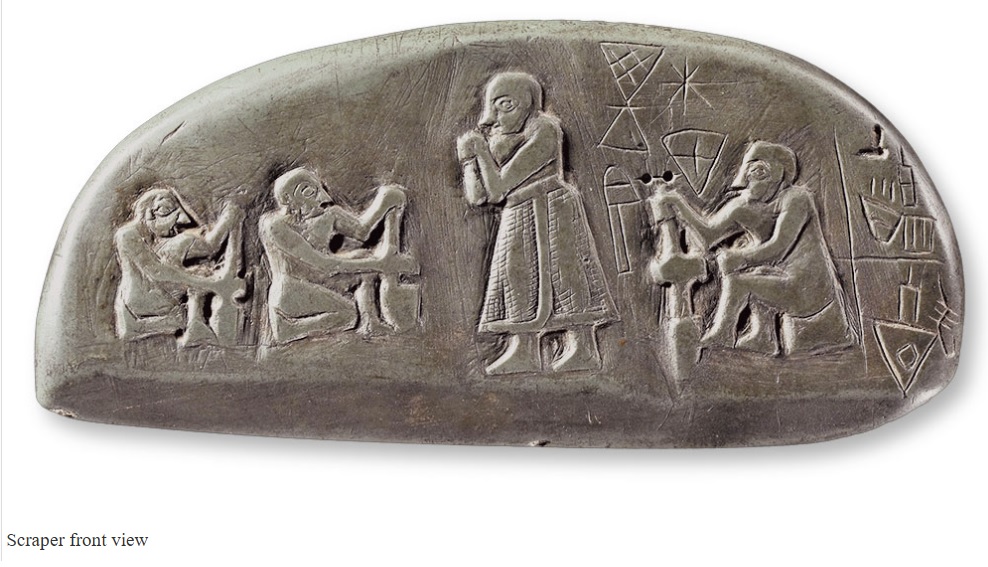
Stone scraper and chisel recording the first woman known by name; Schist. Jemdet Nasr–Early Dynastic period, ca. 3000–2750 BC. Proto-cuneiform inscriptions.
©The British Museum, BM 86260 and 86261


Mold fragment with deified ruler and Ishtar Mesopotamia, Akkadian period, ca. 2220–2184 BC. Limestone. Anonymous loan.
Ishtar in her warrior aspect sits on her lion throne atop a stepped platform. Seated across from her as if an equal is the Akkadian king Naram-Sin, Enheduanna’s nephew and Sargon’s grandson, whose deified status is also indicated by his horned crown.
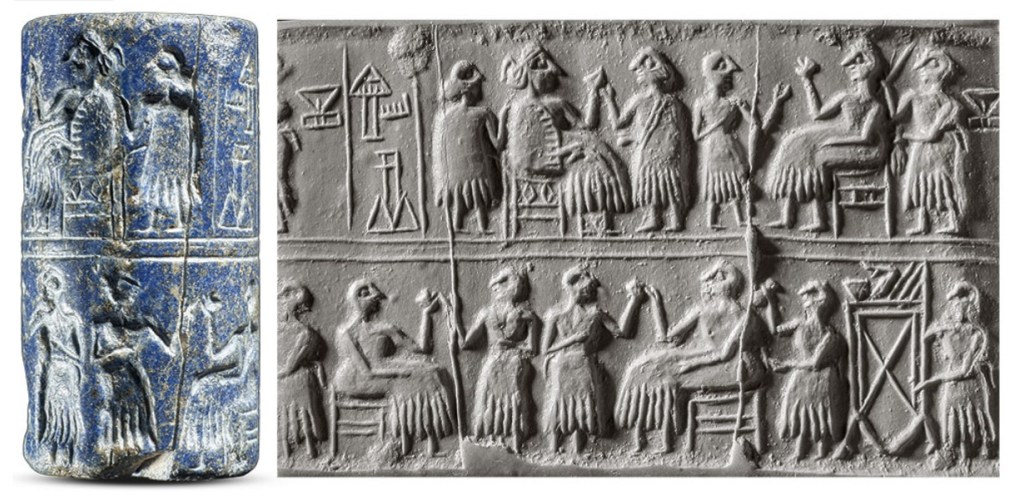
Cylinder seal (and modern impression) of Queen Puabi; Lapis lazuli. Sumerian, Ur (modern Tell el-Muqayyar), PG 800, Puabi’s Tomb Chamber, against Puabi’s upper right arm. Early Dynastic IIIa period, ca. 2500 BC. Cuneiform inscription in Sumerian: Queen Pu-abi. © The British Museum, London, Excavated 1927/28; BM 12154

Cylinder seal (and modern impression) with Mesopotamian deities; Greenstone. Akkadian period, ca. 2200–2154 BC , possibly Sippar (modern Abu Habbah). ©The British Museum, London, Acquired by E. A. Wallis Budge, 1891; BM 89115.
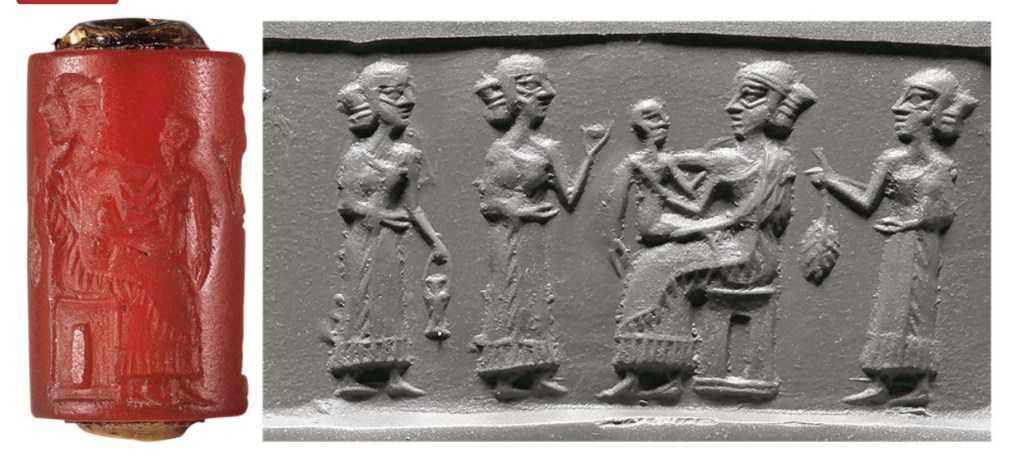
Cylinder seal (and modern impression) with mother and child attended by women. Mesopotamia, Akkadian, Ur (modern Tell el-Muqayyar), PG 871. Akkadian period (ca. 2334–2154 BC). Carnelian and gold. ©University of Pennsylvania Museum of Archaeology and Anthropology, Excavated 1928; B16924.

Cylinder seal (and modern impression) with goddesses Ninishkun and Ishtar; Limestone. Akkadian period (ca. 2334–2154 BC). Cuneiform inscription: To the deity Niniškun, Ilaknuid, [seal]-cutter, presented (this). ©The Oriental Institute of the University of Chicago, Acquired 1947; A27903
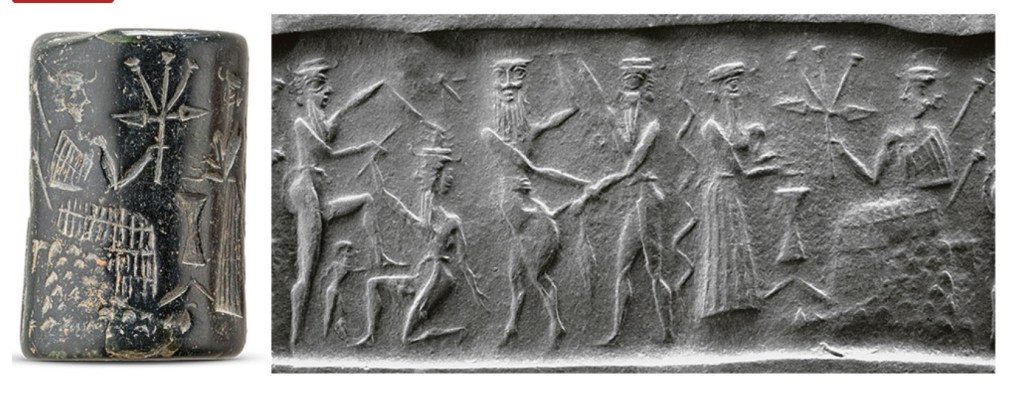
Cylinder seal with Ishtar holding a weapon; deities engaging in combat, Chlorite or steatite; Akkadian period (ca. 2334–2154 BC). ©Musée Du Louvre, Département Des Antiquités Orientales, Paris, Acquired 1911; AO 4709. Photo: Mathieu Rabeau.

Cylinder seal (and modern impression) with “priest-king” and altar on the back of a bull; Lapis lazuli and silver. Uruk (modern Warka), Eanna Precinct. Late Uruk–Jemdet Nasr period, ca. 3300–2900 BC. © Staatliche Museen Zu Berlin, Vorderasiatisches Museum, Excavated 1933–34; VA 11040. Foto: Olaf M. Teßmer.

Ewe and Ram Flanking Plant with a Gatepost. Late Uruk-Jamdat Nasr, ca. 3300–2900 b.c., cylinder seal. © The Morgan Library & Museum, Seal No. 5, acquired by Pierpont Morgan between 1885 and 1908.
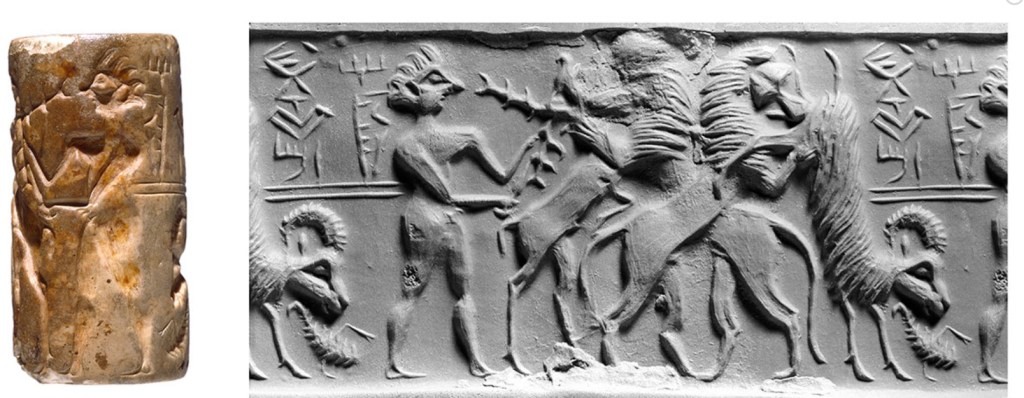
Nude Hero Grappling with Lions Attacking Horned Animals; cylinder seal, shell. Ur, PG 800, Dromos of Queen Puabi’s Tomb on the Body of a Groom (no. 18), B16747 (U.10530), Early Dynastic IIIa, ca. 2550– 2400 b.c., inscribed, Lugal-shà-pà-da.
© University of Pennsylvania Museum of Archaeology and Anthropology, Philadelphia; B16747.
المزيد عن فنون الرافدين في الصفحات التالية More about Mesopotamian arts on the following pages
 مركز دراسات الحضارة CCS