

A red wolf, lion or wild cat with an spiral tail. A Libyco-Berber script has been written under the belly. Tin Aboteka, Tassili n’Ajjer, Algeria. British Museum: 2013,2034.4200. Photo: David Coulson
ذئب أحمر أو أسد أو قط بري بذيل حلزوني. وقد كُتب تحت البطن خط ليبي-بربري، ويمكن رؤية خط آخر في أسفل يسار الصورة. تين أبوتيكا، طاسيلي ناجر، الجزائر. المتحف البريطاني: 2013، 2034.4200. تصوير: ديفيد كولسون

A Libyan warrior holding a spear, pecked figure facing forwards, wearing tasselled (?) garment, surrounded by Libyco-Berber scripts. From Ibel, Aïr Mountains, Niger. Photo: David Coulson. British Museum: 2013,2034.9338
محارب ليبي يحمل رمحاً، يرتدي ثوباً مزيناً بشراشيب أو مدرعاً بأدوات حادة، وتحيط به كتابات ليبية-بربرية. من إبل، جبال آير، النيجر. تصوير: ديفيد كولسون. المتحف البريطاني: 2013، 2034.9338
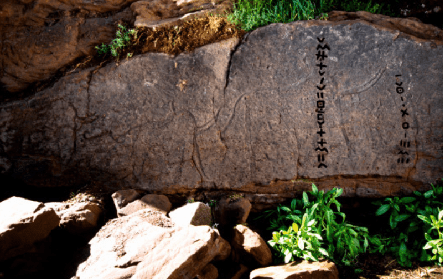
Panel with elephants and human figures superimposed by two Libyco-Berber inscriptions, some consider them one of the oldest written in this alphabet (enhanced for a better view of the symbols). From Oukaïmeden, High Atlas Mountains, Morocco. Photo: David Coulson. © British Museum: 2013,2034.5878
لوحة بأشكال فيلة وحيوانات أخرى، وشخصيات بشرية، حُفر فوقها نقشان ليبيان-بربريان، ويرى بعضهم أنهما ربما كانا من أقدم النقوش المكتوبة بهذه الأبجدية (تم إبراز الخط لرؤية العلامات بشكل أفضل). من أوكايمدن، جبال الأطلس الكبير، المغرب. تصوير: ديفيد كولسون. © المتحف البريطاني: 2013،2034.5878
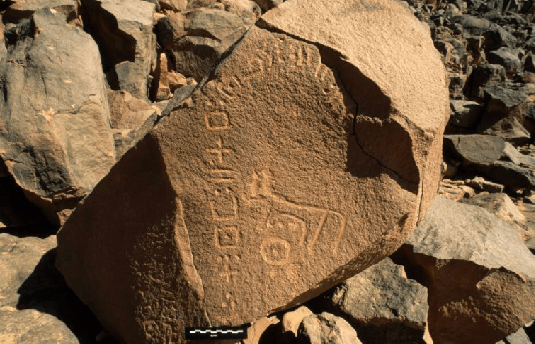
Libyco-Berber inscription engraved near a cow. From Wadi Mathendous, Messak Settafet, Fezzan, Libya. Photo: David Coulson, © British Museum: 2013,2034.2792
نقش ليببي-بربري محفور بقربه رسم بقرة. من وادي متخندوش، مساك سطات، فزان، ليبيا. تصوير: ديفيد كولسون، © المتحف البريطاني: 2013،2034.2792

Limestone frieze with inscription in Numidian; half of a bilingual inscription, the other half being Punic; h 68.58, w 91.44. From Mausoleum of Ateban, Dougga, Tunisia. This inscription was instrumental in deciphering Numidian script which is alphabetic and reads from right to left like Punic. Discovered in 1631 by Thomas d’Arcos who copied it. In 1842 Sir Thomas Reade, HBM consul at Tunis, had it removed, involving the ruin of the building. British Museum: 125226
لوح من الحجر الجيري عليه نقش نوميدي؛ وهو نصف نقش ثنائي اللغة، ونصفه الآخر باللغة الفينيقية؛ ارتفاع 68.58 سم، عرض 91.44 سم. من ضريح عطبان، دوقة، تونس. كان هذا النقش مفيداً في فك رموز النص النوميدي الذي يعتمد على الترتيب الأبجدي ويقرأ من اليمين إلى اليسار مثل الفينيقية. اكتشفه توماس داركوس عام 1631 ونسخه، وفي 1842 أمر توماس ريد، القنصل البريطاني في تونس، بانتزاعه وشحنه إلى لندن، وهو ما أدى إلى تدمير المبنى. المتحف البريطاني: 125226.
 مركز دراسات الحضارة CCS