
The Rock Art of the Sahara Gallery (page 5)
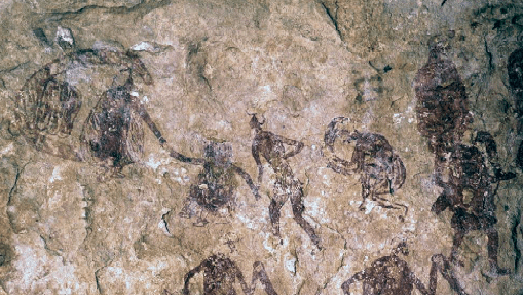
A scene from daily life in Ouan Amil, Acacus. The central figure is at the top left, and appears to be a tribal leader sitting on a throne, or distinctive seat. He is also dressed differently from the others.
مشهد من الحياة اليومية في وان اميل، أكاكوس. شخصية مركزية في أعلى اليسار، ويبدو أنه زعيم قبلي يجلس على عرش أو مقر مميز، كما إن لباسه مختلف عن الآخرين.

A cow that appears to have a broken horn. The deep knowledge of livestock led the ancient desert dwellers to draw their animals with great precision. Tadrart Acacous. Ouan Amil.
بقرة بقرن مكسور. المعرفة العميقة بالمواشي جعلت سكان الصحراء القدماء يرسمون حيواناتهم بدقة كبيرة. تدرارت أكاكوس. وان اميل.
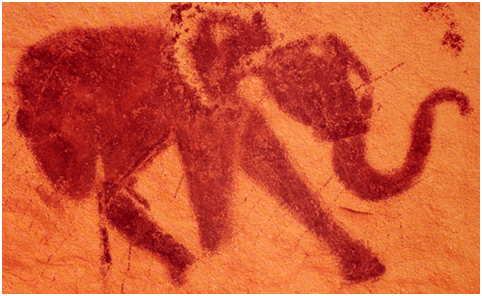
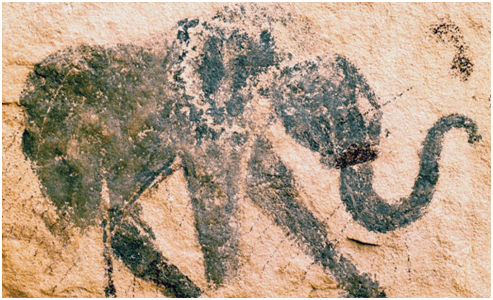
Elephant walking in a very calm and natural way. This drawing shows the accuracy of direct observation by the primitive artist. Length (tail to tip of trunk): 0 – 0.34 m. Fadnoun, Tassili-N’Ajjer.
فيل يمشي بطريقة هادئة وطبيعية. يوضح هذا الرسم دقة الملاحظة من قبل الفنان البدائي. الطول (من الذيل إلى طرف الجذع): 0 – 0.34 م. فادنون، تاسيلي-ناجر
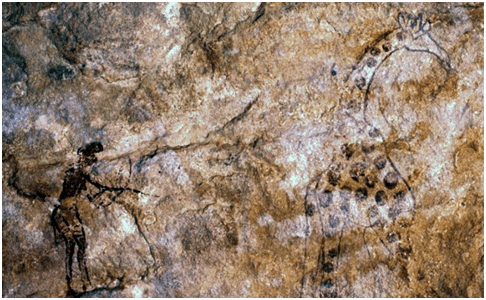
Archer preparing to hunt a giraffe. Tadrart Acacous. Ouan Amil.
رامي سهام يستعد لاصطياد زرافة . أكاكوس، وان اميل.

Drawing ‘bi-triangular’ bodies, for humans and animals, especially horses, was a common artistic style, as shown by the drawings spread from Oued Jrid (Mauritania) in the west to Ennidi (Chad) in the east. Tadrart Acacous. Oued Kessan.
رسم الجسم بمثلثين، في الإنسان والحيونات، وخاصة الخيول، كان نمطاً فنياً شائعاً كما ترينا الرسومات المنتشرة من وادي الجريد (موريتانيا) غرباً إلى انيدي (تشاد) شرقاً. هذا الرسم من وادي كسان، تدرارت أكاكوس.

An archer holding his bow. The hairstyle seems to have been shared by both men and women, and he is wearing a skirt. Was it a transparent skirt or made of some kind of netting, or did the artist not want to hide the details of the body?
رامي يحمل قوسه. يبدو أن تسريحة الشعر كانت مشتركة بين الرجال والنساء، وهو يرتدي تنورة. هل هي تنورة شفافة أم مصنوعة من نوع من الشباك، أم أن الفنان لا يريد إخفاء تفاصيل الجسم؟ أكاكوس، وان اميل

Pastoral scene. A herd of bovids is followed by a shepherd in the style of Ouan Amil, holding a long staff in one hand. Width of the panel: 0.65 m. Tadrart Acacous, Tin-Achigh.
مشهد رعوي. قطيع من الأبقار يتبعه راع على طراز وان اميل، يحمل عصا طويلة. عرض اللوحة: 0.65 متر. تدرارت أكاكوس، تين-أشيغ.
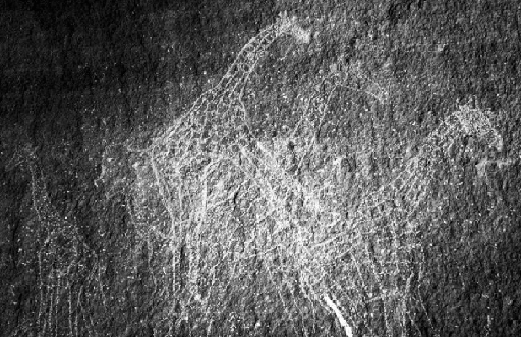
Herd of giraffes. Tadrart Acacous. Oued Kessan. Width of the panel: 1.33 m.
قطيع زرافات, تدرارت أكاكوس، وادي كسان، عرض اللوحة: 1.33 متر.

Two horses and a man runs behind them. Length (front hooves to back hooves): 0.37 m. Tadrart Acacous, Teshouinat-Tagzelt.
Photo: Maximilien Bruggmann
حصانان ورجل يركض خلفهما. الطول (من حوافر الخيول الأمامية إلى حوافرها الخلفية): 0.37 متر. أكاكوس، تشوينات-تاغزلت.
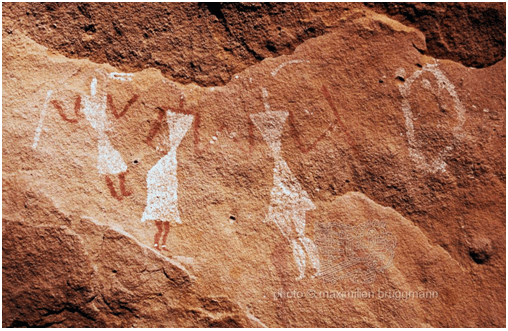
Three figures wearing narrow white cloaks. The height of the middle is 0.20 m. Note the white stick on the left. Tadrart Acacous. Tin-Achigh. Photo: M. Bruggmann
ثلاثة أشخاص يرتدون عباءات بيضاء ضيقة. ارتفاع الأوسط 0.20 متر. لاحظ العصا البيضاء على اليسار. أككوس، تين-أشيغ.
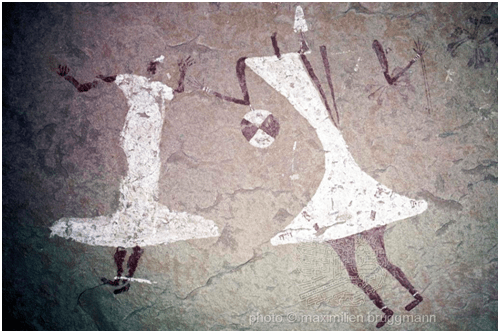
Two figures wearing white cloaks. The width of the cloak from right to left is 1.10 m. Tadrart Acacus. Tchouinat-Taghzalt.Photo: M. Bruggmann
شخصان يرتديان عباءتين بيضاوين. عرض العباءة من اليمين إلى اليسار 1.10 متر. تادرارت أكاكوس. تشوينات-تغزالت.
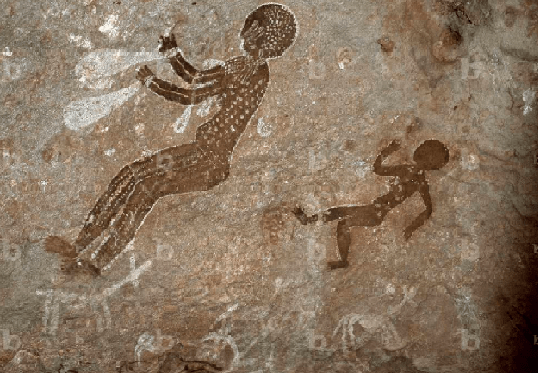
Two figures in an unknown movement or action (8000-7000 BC). Tassili N’Ajjer. Photo: Luisa Ricciarini.
شخصان في وضعية حركة أويقومان بعمل غير معروف (8000-7000 ق.م). تاسيلي ناجر. صورة: لويزا ريكياريني.
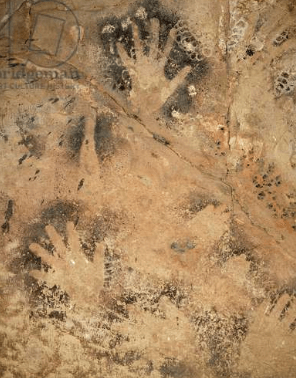
Hands in negative in a cave of Wadi el Obeyd in the White Desert, Egypt. Period from 8000 to 3000 years BC. Phot: Jean Bernard.
آثار أيدٍ في كهف وادي العُبيد في الصحراء البيضاء، مصر. الفترة من 8000 إلى 3000 سنة ق.م. تصوير: جان برنارد.
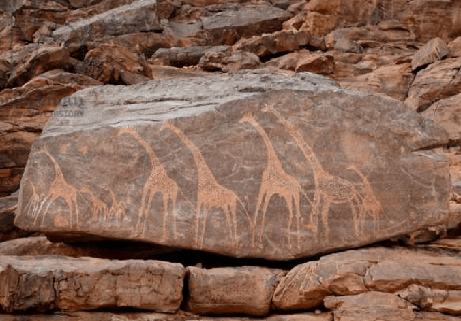
Engraving of a set of giraffes (Dim: 3x1m) in the Uweinat massif, Libyan-Egyptian border. Photo: Jean Bernard.
نقش قطيع من الزرافات (الأبعاد: 3 × 1 متر)، العوينات، الحدود الليبية المصرية. تصوير: جان برنارد.
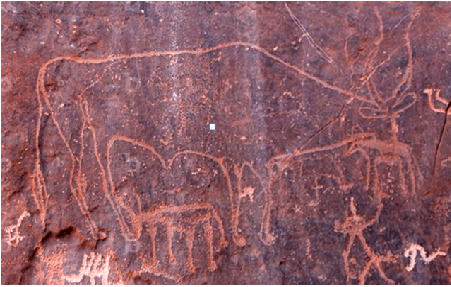
Bull, animals and human figure. Akakus, Inchalt, Ghat. Different styles and periods.
ثور وحيوانات وشكل بشري. أكاكوس، إنشالت، غات. أساليب وفترات مختلفة.

Two large-horned bovids engraved on a block of rock, c. 2000 to 3000 years BC. Site of Adrar n Zerzem (near Taghjijt), Anti-Atlas, Southern Morocco. Photo: Patrice Cartier.
شكلان بقريّان، حوالي 2000 إلى 3000 سنة ق.م. موقع أدرار زرزام (قرب تغجيجت)، الأطلس الصغير، جنوب المغرب. تصوير: باتريس كارتييه.
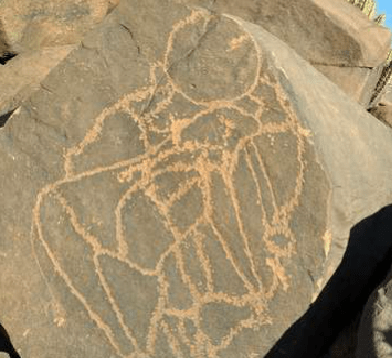
Overlapping carvings, a cow with two long rounded horns can be seen. (3000-2000 BC), Adrarnezrem site, near Taghjijt, Anti-Atlas, southern Morocco. Photo by Patrice Cartier.
نقوش متداخلة، يمكن رؤية بقرة بقرنين طويلين مستديرين (3000-2000 ق.م.)، موقع أدرارنزرزام، قرب تغجيجت، الأطلس الصغير، جنوب المغرب. تصوير باتريس كارتييه.

A couple in a dancing position. Uweinat, Libyan-Egyptian border. Before 3000 BC. Photo: Jean Bernard.
شخصان في وضعية راقصة. العوينات، الحدود الليبية-المصرية. قبل 3000 ق,م. تصوير: جان برنار.

Detail from one of the murals of Tassili n’Ajjer.
تفصيل من إحدى جداريات تاسيلي نآجر.
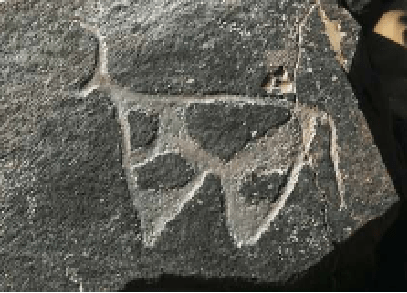
Engraving of a bovine figure. Taghit, Hoggar Mountains, Algeria. Photo: Luisa Ricciarini
نقش يمثل شكلاً بقرياً. تاغيت، جبال الهقار، الجزائر. تصوير: لويزا ريتشيريني.
 مركز دراسات الحضارة CCS